Source Insulated Flared Air Conditioner Lineset for Home, Refrigerator, Air Condition
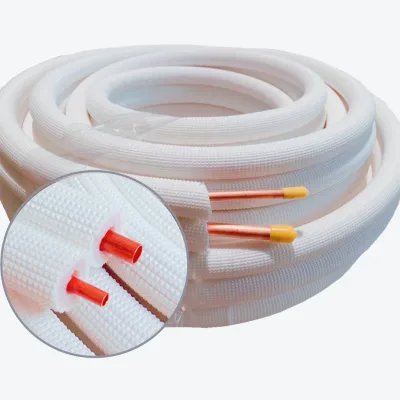
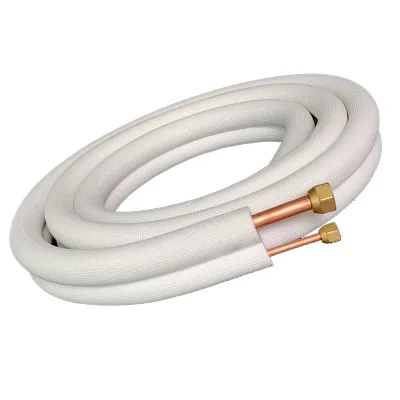
Find 25 insulated flared air conditioner lineset options with customizable sizes, insulation types, and certifications. Buyers can compare wall thickness, delivery times, and origin locations to select the right product for home or industrial refrigeration needs.
Key considerations
Products List


$15.00 - $20.00
Moq: 500


Comprehensive Sourcing Guide
Strategic Sourcing Guide for Insulated Flared Air Conditioner Linesets
Understanding Technical Specifications and Material Composition
When sourcing insulated flared air conditioner linesets, buyers must first establish a clear understanding of the core technical parameters that define product performance. The primary material composition for these linesets typically involves copper grades known for their thermal conductivity and durability. Based on available market data, common copper grades include Tp2 and T2, which are standard for refrigeration applications. The physical state of the copper pipe is generally soft, allowing for the necessary flexibility during installation in residential and commercial HVAC systems.
The dimensions of the lineset are critical for system compatibility. The industry offers a wide range of standard sizes, including 1/4", 3/8", 1/2", 5/8", and 3/4" diameters. These sizes often correspond to specific length configurations, such as 50 feet or 100 feet, though custom lengths ranging from 3 to 50 meters are frequently available upon request. The wall thickness is another vital specification, typically falling within the range of 0.8mm to 1.2mm. This thickness ensures the pipe can withstand the internal pressures of refrigerant without compromising structural integrity.
Insulation is the defining feature of a lineset, serving to prevent thermal loss and condensation. The insulation material is usually either rubber or polyethylene (PE). In terms of color, the insulation is commonly available in black or white, with customized color options often accessible for specific project requirements. Some advanced configurations may feature a three-layer construction, which can enhance durability and thermal efficiency. The shape of the pipe is consistently round, designed to fit standard fittings and flares. The ventilation mode for the surrounding environment is typically natural ventilation, meaning the lineset is designed to operate effectively in standard ambient conditions without requiring forced air circulation around the pipe itself.
Compliance, Certification, and Regulatory Standards
Navigating the regulatory landscape is essential for B2B procurement to ensure that products meet international safety and environmental standards. A robust lineset should carry multiple certifications that validate its quality and safety. Common certifications observed in the market include RoHS (Restriction of Hazardous Substances), CE (Conformité Européenne), and ISO9001 for quality management systems. Additionally, specific fire safety standards such as UL94 and ASTM B280 are critical for verifying the flame retardancy and material properties of the insulation.
Buyers should verify that the supplier provides documentation confirming compliance with these standards. The presence of a CCC (China Compulsory Certification) mark may also be relevant for products intended for the Chinese market or those exported with specific regional requirements. It is important to note that while "ASTM BASTM BState:Soft" appears in some data sets, the precise standard reference should be clarified with the supplier to ensure it aligns with the intended application. The standard production standard for these products is often "as customized," indicating that manufacturers can tailor the product to meet specific project codes, provided the base material and insulation meet the required safety benchmarks.
Cost Drivers and Pricing Dynamics
The pricing of insulated flared air conditioner linesets is influenced by several variable factors, resulting in a broad observed price range from $0.10 to $6,500 USD per unit or batch. This significant variance is not indicative of quality differences alone but rather reflects the scale of purchase, customization level, and total length of the lineset. The cost is heavily driven by the raw material price of copper, which fluctuates in the global market. Furthermore, the type of insulation material selected—whether standard rubber or specialized PE—will impact the final unit cost.
Customization is a major cost driver. While standard sizes like 1/4" and 3/8" are generally more affordable, custom lengths, specific wall thicknesses, or unique color combinations (such as grey foam insulation) will incur additional charges. The Minimum Order Quantity (MOQ) also plays a role in pricing; observed MOQs range from 1 unit to 5,000 units. Buyers purchasing in smaller quantities may face higher per-unit costs, whereas bulk orders often benefit from economies of scale. The packaging method, typically cartons, adds a minor but necessary cost component to protect the product during transit.
Typical Applications and Usage Scenarios
Insulated flared air conditioner linesets are primarily designed for use in the refrigeration industry, serving as the critical conduit for refrigerant flow between the indoor and outdoor units of an HVAC system. The application scope is broad, covering both residential homes and commercial air conditioning units. The product is specifically engineered for use in refrigerators and air conditioners, ensuring efficient heat exchange and system longevity.
The versatility of these linesets allows them to be deployed in various environments. The soft state of the copper pipe facilitates installation in tight spaces or around complex architectural features, while the insulation protects the refrigerant from ambient temperature fluctuations. The three-layer insulation option is particularly beneficial in applications where condensation control is paramount, such as in humid climates or high-temperature environments. The natural ventilation mode suggests that these linesets are suitable for standard indoor and outdoor installations where airflow is not restricted.
Supplier Evaluation and Production Capabilities
When evaluating potential suppliers, buyers should look for manufacturers with a proven track record in the refrigeration industry. The production origin is a key indicator of supply chain stability; major manufacturing hubs include Jiangsu and Changzhou in China, regions known for their specialized copper processing capabilities. A reliable supplier should demonstrate the ability to handle customization requests, as the "prod_standard" is often listed as "as customized."
Production time and delivery schedules are critical factors in procurement planning. Typical production times for these linesets are around 10 days, with a delivery time ranging from 15 to 20 days. This timeline can vary based on the complexity of the order and the current capacity of the factory. Buyers should also verify the supplier's ability to provide samples, as many manufacturers offer sample approval processes to ensure the product meets specific project requirements before committing to a large order. The warranty period is another important metric, with a standard offering of two years for both the product and the insulation integrity.
Quality Control and Inspection Protocols
Maintaining high quality standards is paramount to the performance of air conditioning linesets. Quality control should begin at the raw material stage, verifying that the copper grade matches the specified Tp2 or T2 standards. The insulation process must be rigorous to ensure there are no gaps or inconsistencies in the rubber or PE layers. The wall thickness, ranging from 0.8mm to 1.2mm, must be consistently maintained across the entire length of the pipe to prevent leaks or pressure drops.
Inspection protocols should include visual checks for color consistency (black, white, or grey) and surface defects. The flared ends of the pipes must be inspected to ensure they are perfectly formed to create a leak-tight seal when connected to the system. For products claiming UL94 or ASTM B280 compliance, buyers should request third-party test reports to validate these claims. The packaging in cartons should be robust enough to prevent damage during shipping, and the product should be clearly labeled with the model number, size, and length to avoid installation errors.
Long-Term Procurement Considerations
Sourcing insulated flared air conditioner linesets is not just a one-time transaction but a long-term partnership that impacts system reliability. Buyers should consider the warranty period, which is typically two years, as an indicator of the manufacturer's confidence in their product. A longer warranty or a clear warranty policy can provide peace of mind regarding potential defects.
The flexibility of the supplier to handle "negotiable" MOQs is also a significant advantage for buyers with fluctuating demand. The ability to customize the product, including the foam color and specific dimensions, ensures that the lineset can adapt to future project requirements without the need for a complete supplier change. Finally, buyers should maintain a focus on the total cost of ownership, considering not just the initial purchase price but also the ease of installation, the durability of the insulation, and the long-term energy efficiency provided by a high-quality lineset. By adhering to these procurement principles, buyers can secure reliable components that support the efficient operation of their HVAC systems.
FAQs
What certifications do insulated flared air conditioner linesets typically have?
These linesets commonly carry RoHS, CE, ISO9001, UL94, and ASTM B280 certifications. Some products also include CCC marks for specific regional compliance. Buyers should verify that the supplier provides documentation confirming these standards before placing an order.
Which copper grades are used for these air conditioner linesets?
The primary copper grades used are Tp2 and T2, which offer high thermal conductivity and durability. These materials are selected for their ability to withstand internal refrigerant pressures while maintaining structural integrity during installation in various HVAC systems.
How long is the production and delivery time for these linesets?
Production typically takes about 10 days, with a delivery time ranging from 15 to 20 days. This timeline may vary depending on the complexity of customization requests and the current capacity of the manufacturing facility in Jiangsu or Changzhou.
What insulation materials are available for these copper pipes?
Insulation is usually made from rubber or polyethylene (PE) in black or white colors. Some advanced configurations feature a three-layer construction with options for grey foam. Customized colors are often available to meet specific project requirements.
Can buyers customize the size and length of the linesets?
Yes, customization is available for size, length, and wall thickness. Standard sizes range from 1/4 inch to 3/4 inch, with lengths from 3 to 50 meters. Buyers can request specific dimensions to fit unique installation needs.
What is the warranty period for insulated flared air conditioner linesets?
The standard warranty period is two years for both the product and insulation integrity. This warranty indicates the manufacturer's confidence in the durability of the copper pipe and the quality of the insulation layers used in the lineset.